Poor power factor increases the current required to deliver useful power to inductive equipment. Electrical Testing Services (ETS) can assess the issue and help businesses plan a correction approach based on measured site conditions.
ISO 17020 · ISO 9001 · ISO 45001 · ISO 14001




Poor power factor increases the current required to deliver useful power to inductive equipment. Electrical Testing Services (ETS) can assess the issue and help businesses plan a correction approach based on measured site conditions.

Motors, pumps, compressors, refrigeration and larger HVAC systems draw reactive power as part of their operation. When reactive demand is high, the electrical system carries more current to perform the same useful work.
Correcting power factors can reduce current demand, release capacity within the installation and help address network or demand charges where the tariff applies. The benefit depends on the site's load profile and electricity billing structure.

A site may warrant investigation when power factor penalties appear on electricity bills, equipment loads have increased or electrical capacity is becoming constrained. Facilities with substantial motor-driven plant are common candidates.
A correction solution should follow measurement rather than assumptions. Load variation, harmonics, operating hours and existing equipment all influence the appropriate response.
ETS can review available electricity data and arrange measurements across the relevant electrical installation. The assessment establishes the existing power factor and how it changes as plant starts, stops or moves through different operating conditions.
This information helps determine whether correction is justified and the capacity required. It also reduces the risk of selecting equipment that is poorly matched to the site.
The assessment considers the equipment creating reactive demand, the operating pattern and any planned changes to plant. A representative load profile is essential for a useful recommendation.
Correction equipment must be sized and controlled for the installation it serves. ETS can define the testing findings and confirm the available implementation scope before work proceeds.
After corrective work is completed, measurements can confirm whether the site is operating within the intended range. Ongoing review may be required where loads change substantially.

ETS uses personnel with the electrical knowledge required to collect and interpret site measurements. Recommendations are based on the installation and its actual operating load.
Power factor issues can involve plant operation, switchboards and broader electrical performance. ETS can coordinate the relevant technical personnel for the agreed assessment scope.
Measured values and observations give the business a clear basis for deciding whether correction work is justified. The results can also support later performance checks.
ETS operates under NATA accreditation for applicable inspection activities and maintains certified management systems for quality, safety and environmental performance.
ETS has worked across commercial and industrial sites since 2002. Its national structure supports assessments for individual facilities and multi-site organisations.
ETS has offices and strategically located personnel throughout Australia. The team supports individual properties, regional programs and national portfolios through one service provider.
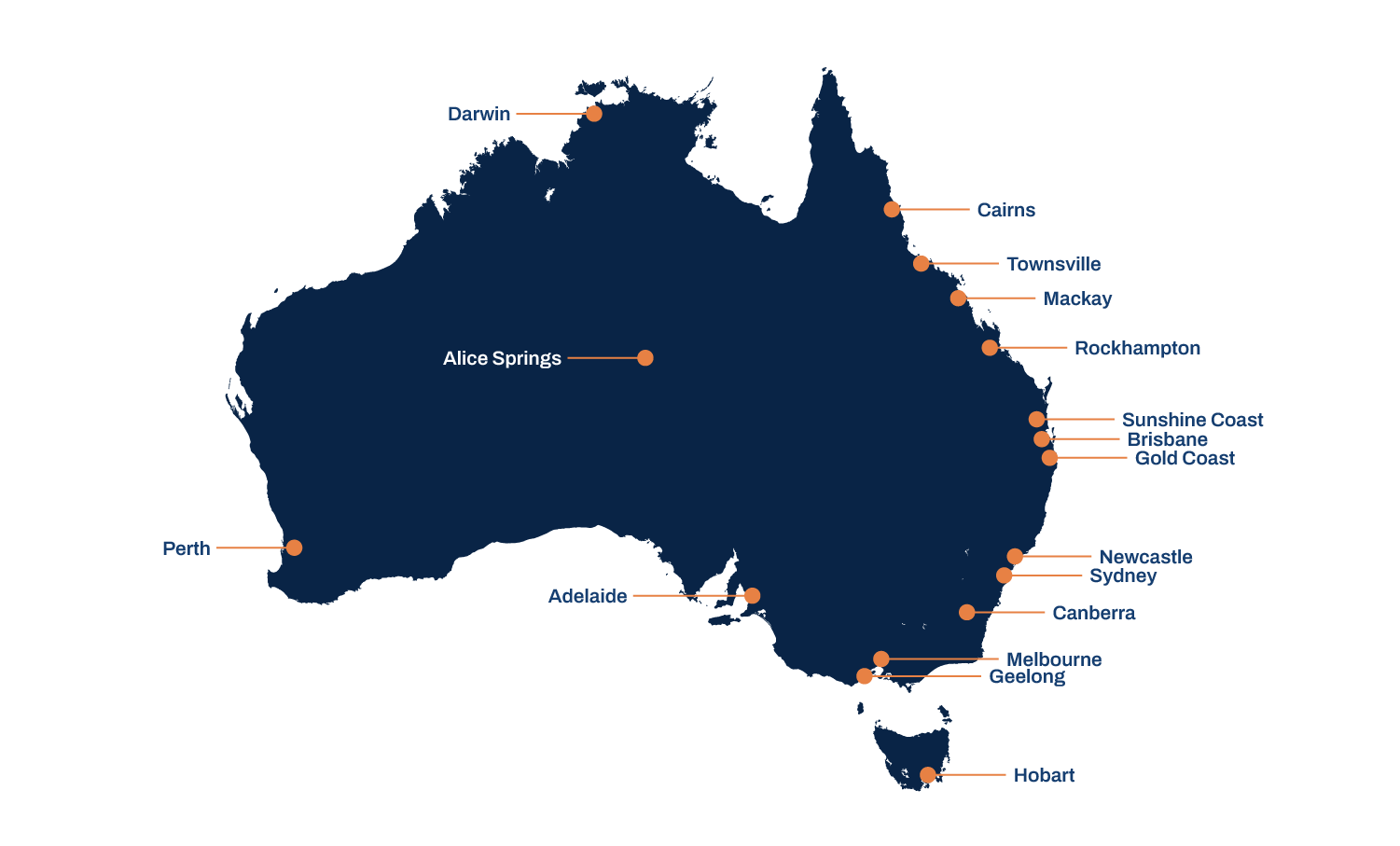
Sydney, Newcastle, Wollongong and Broken Hill
Brisbane, Gold Coast, Sunshine Coast, Cairns, Townsville, Toowoomba and Mt Isa
Perth, Geraldton, Broome, Port Hedland and Kununurra
Darwin and Alice Springs
Provide your electricity bill, available load data and details of the plant operating at the property. ETS can define the assessment scope and determine whether on-site measurement is required.
Call the national desk or send a quote request — we’ll confirm testing sequence and reporting.